Keep routine tasks from being missed
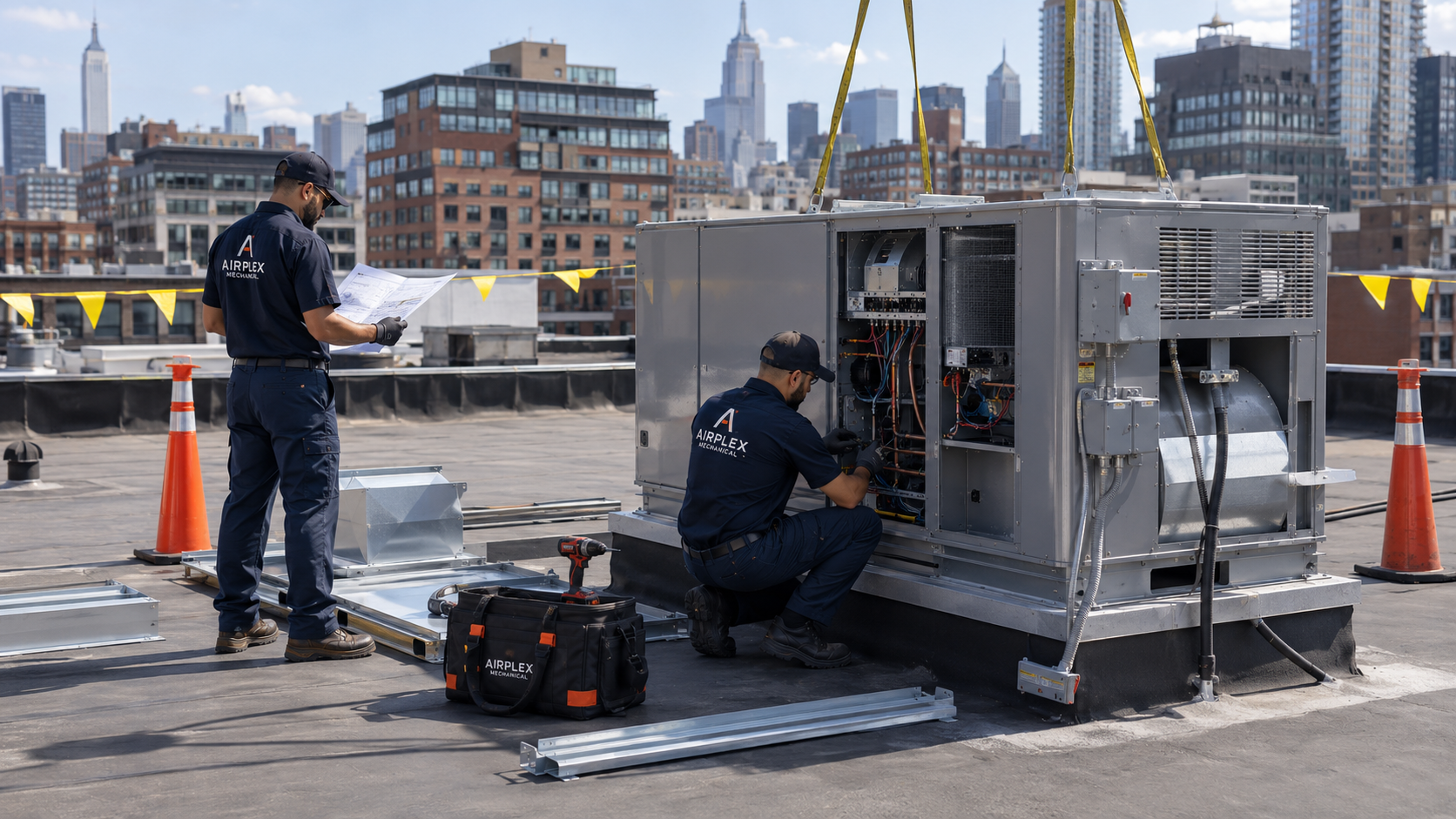
We build the task list around the installed equipment and operating conditions. Rooftop units, boilers and VRF systems receive the maintenance relevant to their configuration.
Recurring HVAC service agreements
Make commercial HVAC maintenance easier to manage across one building or a property portfolio. Airplex builds recurring service plans for NYC and Northern NJ equipment, with covered assets, visit tasks and follow-up made clear.
The service decision
A useful plan does more than put visits on a calendar. It identifies the equipment, sets appropriate care tasks and records what needs attention after each visit. Airplex helps property and facility teams separate routine maintenance, corrective repairs and longer-term replacement needs so the agreement supports real building decisions.
Site coordination
NYC and Northern NJ property managers may coordinate multiple tenants and shared equipment rooms. We structure the plan around the assets and locations so the team knows what is covered and where follow-up is needed.
UNDERSTAND THE PROBLEM
The agreement should make equipment care and follow-up easier to track.
We build the task list around the installed equipment and operating conditions. Rooftop units, boilers and VRF systems receive the maintenance relevant to their configuration.
Inspection and operating checks can reveal conditions that need repair or monitoring. Maintenance can reduce avoidable neglect, but it cannot guarantee that equipment will never fail.
Records connect the asset to completed work, findings and open recommendations. That history helps explain repeat faults and supports replacement planning.
YOUR SERVICE OPTIONS
Two annual prices can cover very different work.
We identify the covered units and the work for each equipment family in the plan. Excluded or inaccessible equipment remains visible for the building team to address.
These may be separate from scheduled maintenance. Confirm how a repair is quoted and whether any emergency attendance or parts coverage is included.
Agree who receives findings and how recommended work moves to approval. A list of defects is less useful if no one owns the next decision.
PLAN THE NEXT STEP
A practical agreement reflects how the building is used.
We plan access to tenant areas, rooftops and plant rooms with the building contact, and identify tasks that may require a separate interruption.
Consistent asset names and reporting make it easier to compare findings across a portfolio. Site-specific needs still belong in the schedule.
New equipment, changed operating hours and removed units can alter the maintenance needs. Keep the covered asset list current rather than carrying forward an outdated inventory.
PRICING FACTORS
Plan cost reflects the number and type of units, tasks, visit frequency and access. Compare covered equipment, reports and repair terms on the same basis, with exclusions visible alongside the annual price.
Two plans with the same number of visits can provide very different work. One may cover only a rooftop unit, while another includes connected ventilation, controls or other equipment. Begin with an equipment list and the functions that matter to the building, then identify the tasks appropriate to each installation.
A unit serving a lightly occupied office and one supporting extended daily operation may have different service needs. Manufacturer requirements, use and observed condition help shape the plan. A fixed visit count is a scheduling feature; it is not, by itself, a complete description of the preventive work the owner is buying.
Preventive maintenance can identify a defect, but finding it does not mean the corrective repair is included in the agreement. The owner should be able to distinguish tasks completed during the visit from recommendations requiring parts, further diagnosis or approval.
For example, a hypothetical visit may complete routine rooftop tasks and identify a damaged fan component. The report should describe that finding and its effect on the next decision. Combining everything under service complete hides the unresolved work; describing the whole visit as a failure ignores the preventive tasks that were actually completed.
Keep findings tied to consistent equipment identifiers. Record what changed, what was corrected and what remains open. This allows an owner to recognize recurring concerns rather than review each service ticket as an isolated event.
The resulting history can support replacement planning. Several unrelated major defects may justify a capital review; repeated visits for the same symptom may instead show that the cause needs reconsideration. A good plan helps distinguish those situations. It should not turn every observation into an urgent replacement recommendation or promise that preventive work eliminates all failures.
Plan tasks around the installed equipment guidance and the periods when each function is needed. Access, occupancy and the permitted interruption also affect when work can be completed. The schedule should make those dependencies explicit instead of assuming every task fits within an ordinary visit.
Review the plan when the building changes. Longer operating hours, a new tenant or additional equipment may change coverage and maintenance priorities. The agreement should remain understandable as the property evolves, with clear handling of repairs, consumables, special work and any response arrangements that have actually been agreed.
Questions before you request service
Only when the agreement says so. Scheduled maintenance, replacement parts and corrective repairs can be separate items. Compare the actual inclusions and exclusions before comparing prices.
The interval depends on the equipment instructions, operating hours, environment and condition. A fixed frequency for every unit can miss those differences. The proposal should explain the basis for the schedule.
An ongoing plan can provide a defined schedule, consistent equipment coverage and a condition history across visits. Its value depends on those agreed tasks and follow-up, not merely a recurring appointment. Compare the deliverables and responsibilities so you understand how unresolved findings, changing equipment and future work are handled.
Review completed tasks, unresolved findings, recurring complaints and equipment-specific repair history. Look for clearer condition information and timely follow-up, rather than judging only by how many visits occurred. Energy or reliability improvements need a suitable baseline and context; they should not be assumed from the existence of a contract.








Your next step
Tell us what is happening or what you want to change. You do not need to diagnose the system or assemble every equipment record before contacting Airplex.